What is acne vulgaris?
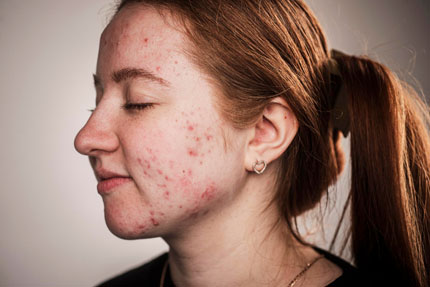
- Acne vulgaris develops when pores become blocked and inflamed.
- It commonly affects the face, chest, shoulders, and back because these areas have more sebaceous, or oil-producing, glands.
- Lesions may be non-inflammatory, such as open and closed comedones, or inflammatory, such as papules, pustules, nodules, and cysts.
- Acne is not a sign of poor hygiene, and aggressive scrubbing usually makes irritated skin worse.
Epidemiology
- Acne is one of the most common skin disorders worldwide.
- It is especially common in adolescents, with prevalence estimates ranging from about 35% to more than 90% in this age group.
- Moderate to severe acne affects around 20% of young people.
- Acne is not limited to teenagers; it often continues into adulthood, persisting into the 20s in around 64% of individuals and into the 30s in around 43%.
- Family history matters: epidemiologic data show a strong association between acne and parental history, and heritability is high.
- Beyond the skin, acne can affect self-esteem, mood, social confidence, and quality of life.
Causal factors
Intrinsic factors
- Genetic tendency: Acne often runs in families, and people with a positive family history may develop acne earlier or more severely.
- Hormonal influence: Androgens increase sebum production and help drive acne formation, especially during puberty and in hormonally sensitive adults.
- Sebum overproduction: Excess oil creates an environment that supports follicular blockage and inflammation.
- Follicular hyperkeratinization: Skin cells within the follicle do not shed normally, leading to the formation of the microcomedone, the earliest acne lesion.
- Inflammatory tendency: Acne is not just “blocked pores”; inflammation is active from early stages of disease.
Extrinsic or trigger-related factors
- Cosmetics and occlusion: Comedogenic products, heavy oils, helmets, masks, friction, and occlusive skin care may worsen breakouts in some people.
- Dietary influences: High glycemic load diets have the most consistent evidence for worsening acne; dairy may contribute in select populations, but findings are less consistent.
- Body weight and skin type: Epidemiologic reviews found associations between acne severity and factors such as BMI and skin type.
- Stress and lifestyle factors: Stress may aggravate acne in some individuals, even though it is rarely the sole cause.
- Smoking and hygiene myths: Available evidence does not support poor hygiene as a cause, and the relationship between smoking and acne remains unclear.
Schedule An Appointment Today
Our dedicated team is here to assist you. Reach out anytime—we’re ready to help!
Book Appointment
Pathophysiology
- Acne pathophysiology is built around four major processes: increased sebum production, hyperkeratinization(SKIN SHEDDING) within follicles, proliferation of Cutibacterium acnes(BACTERIA), and inflammation.
- The primary lesion is the microcomedone, which can evolve into visible blackheads, whiteheads, and inflammatory acne lesions.
- Cutibacterium acnes contributes to inflammation and immune activation within the follicle.
- This is why effective acne treatment often combines more than one approach, for example a retinoid with benzoyl peroxide.
Treatment options
Treatment is chosen according to acne type, severity, scarring risk, skin sensitivity, patient age, hormonal pattern, and previous response to treatment.
Medical treatment
- Topical retinoids: Strongly recommended because they target comedones, help prevent new lesions, and support long-term acne control.
- Benzoyl peroxide:Useful both alone and in combinations because it reduces acne-causing bacteria and helps limit antibiotic resistance.
- Topical antibiotics: Used in inflammatory acne, usually in combination with benzoyl peroxide.
- Topical clascoterone:unavailable
- Oral antibiotics: Used for moderate inflammatory acne, generally for limited durations.
- Hormonal therapy: Combined oral contraceptives and spironolactone in hormonal acne in female patients.
- Isotretinoin:For severe, scarring, nodulocystic, or treatment-resistant acne.
Comedone extraction
- Comedone extraction can be a useful clinic-based procedure for selected patients with many persistent blackheads and whiteheads.
- Improper squeezing at home often increases inflammation, pigmentation, and the risk of scarring.
Chemical peels
- Chemical peels can be considered in mild to moderate acne, especially when comedones, oiliness, post-acne marks, or superficial textural change are also concerns.
- Peels are generally well tolerated.
- Salicylic acid, glycolic acid, mandelic acid, Jessner-type peels, and combination peels may all be used depending on skin type and acne pattern.
- Peel selection should be individualized, to minimize irritation and post-inflammatory pigmentation.
Lasers and light-based procedures
- Laser and light-based treatments are add on options for inflammatory acne, acne marks, and acne scars.
- These procedures can be useful when acne is persistent, when rapid cosmetic improvement is important, or when scarring is already present.
Role of isotretinoin
- Isotretinoin remains one of the most effective treatments for severe acne and for acne that is leaving scars or not responding adequately to standard therapy.
- It works by reducing sebum production, improving follicular keratinization, and addressing multiple drivers of acne at the same time.
- Oral isotretinoin is used for severe acne, acne causing psychosocial burden or scarring, and acne failing standard oral or topical treatment.
- It is not a casual medicine and must be prescribed with proper counseling and follow-up.
- The most important safety issue is teratogenicity, so pregnancy prevention and careful counseling are essential in patients who can become pregnant.
- Monitoring plans may include review of mucocutaneous dryness, mood symptoms, laboratory parameters when indicated, and treatment adherence.
Prognosis and acne scars
- Acne often improves with time, but the course is variable and some patients develop prolonged disease or need recurrent treatment into adulthood.
- Early, effective treatment matters because untreated inflammation increases the chance of pigmentation changes and permanent scarring.
- Acne scars may be atrophic, such as ice-pick, boxcar, and rolling scars, or less commonly hypertrophic and keloidal.
- Once scars form, improvement is possible but usually requires procedure-based treatment rather than creams alone.
- This is why dermatologists often treat active acne and scar risk together, not as two completely separate problems.
Role of diet
- Diet can influence acne.
- High glycemic index or high glycemic load patternhas shown a modest but meaningful pro-acne effect.
- Dairy intake may worsen acne in selected groups, particularly in Western dietary patterns, but findings are mixed and not identical across all populations.
- Extreme elimination diets are usually not necessary.
- A practical approach is to encourage balanced eating, lower glycemic load choices, and observation of personal triggers rather than fear of every food.
Latest advancements
- Research continues to refine the role of diet, microbiome-related pathways, and combination regimens in long-term acne control.
When to seek dermatology care
- Painful acne, frequent breakouts, acne on the chest or back, dark marks that linger, early scars, or acne affecting confidence are all good reasons to seek care sooner rather than later.
- Early treatment can reduce the risk of scarring and help build a plan that is realistic, safe, and easier to follow.
A practical message for patients
- Acne is common, treatable, and nothing to be embarrassed about.
- There is no single “best” treatment for everyone; the right plan depends on the type of acne, the skin type, scar risk, lifestyle, and treatment goals.
- Good acne care is not only about clearing today's pimples; it is also about protecting tomorrow's skin from marks, scars, and frustration.