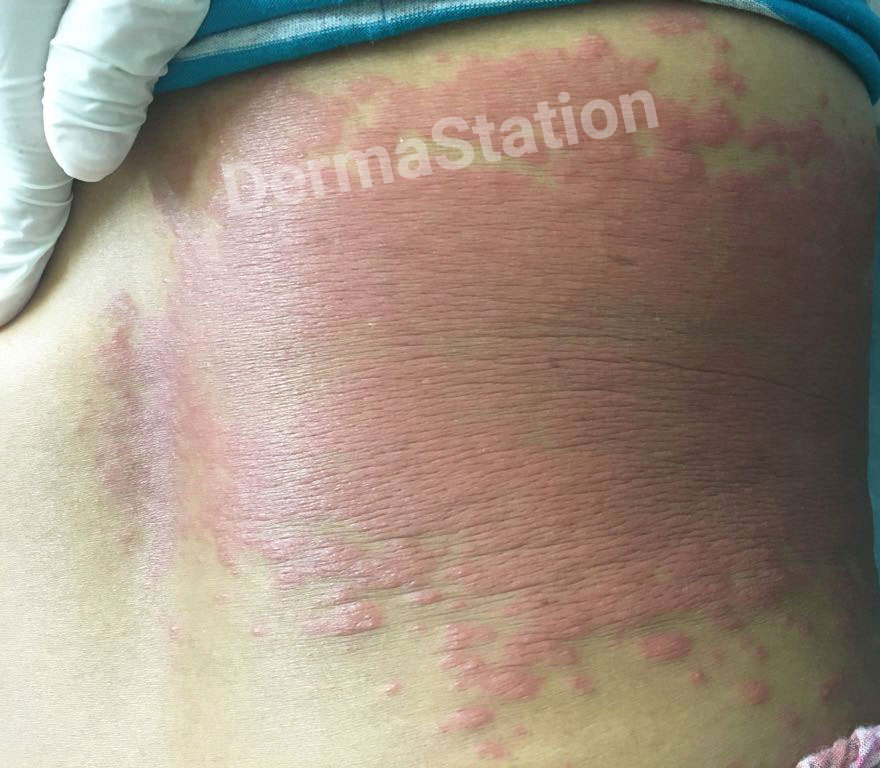
What is urticaria?
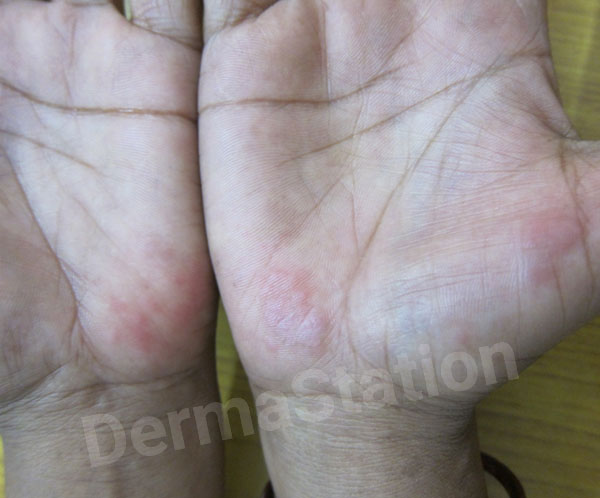
- Urticaria means short-lived itchy bumps or plaques on the skin.
- Individual wheals usually fade within 24 hours, but new ones may appear in different places.
- Some patients also get swelling of deeper tissues, especially around the eyes, lips, hands, feet, or genitals.
- When hives keep returning for more than 6 weeks, the condition is called chronic urticaria.
How common is it?
- Urticaria is common worldwide.
- Chronic spontaneous urticaria affects around 1% of people globally.
- It can occur at any age, but it is often seen in adults between 30 and 50 years of age.
- Women are affected more often than men.
- In many patients, the disease lasts more than a year, and in a substantial group it lasts much longer.
What can trigger urticaria?
Not every patient has a clear trigger. In fact, many people with chronic urticaria do not find a single definite cause.
Intrinsic factors
- Autoimmune activity: In more than half of patients with chronic spontaneous urticaria, the immune system appears to activate mast cells through IgE and/or IgG autoantibodies.
- Thyroid autoimmunity: Autoimmune thyroid disease is a recognized associated condition.
- Genetic and immune tendency: Some people seem biologically more prone to mast cell overactivity and inflammation.
- Emotional stress and poor sleep can worsen disease burden and may amplify symptoms inn susceptible patients.
Extrinsic factors
- Infections can trigger or worsen hives in some patients.
- Medicines may aggravate urticaria, especially NSAIDs such as ibuprofen in some individuals.
- Pressure, heat, cold, sweating, exercise, sunlight, vibration, or scratching may trigger chronic inducible urticaria.
- Certain foods may act as aggravating factors in selected patients, but food is not the main cause in most chronic spontaneous urticaria cases.
What happens in the skin?

- The key cells in urticaria are mast cells and basophils.
- When these cells are activated, they release histamine and other inflammatory mediatorschemicals.
- This causes itching, redness, swelling, and the typical raised wheals. patients notice on the skin.
- In some patients, the disease is driven by autoimmune pathways, which helps explain why hives can continue even when there is no obvious outside trigger.
Schedule An Appointment Today
Our dedicated team is here to assist you. Reach out anytime—we’re ready to help!
Book Appointment
Types of urticaria
- Acute urticaria: Hives for less than 6 weeks.
- Chronic spontaneous urticaria: Recurrent hives, angioedema, or both for more than 6 weeks without a consistent external trigger.
- Chronic inducible urticaria: Hives triggered by a physical or environmental stimulus such as pressure, cold, heat, or scratching.
Symptoms patients often notice
- Itchy raised welts that come and go.
- Burning or stinging in some lesions.
- Swelling of lips, eyelids, hands, or feet.
- Sleep disturbance because of itching.
- Anxiety about sudden flares.
Frustration when the rash disappears before the clinic visit and returns later.
How is urticaria diagnosed?
- Diagnosis is mainly clinical and depends on the history and examination.
- Dermatologists focus on how long the rash has been present, how long each lesion lasts, whether angioedema occurs, and whether there are physical triggers.
- Limited tests may be advised when the history suggests an associated condition, especially thyroid disease or another inflammatory disorder.
- Extensive testing is usually not needed for every patient.
Treatment goals
- Stop itching and swelling.
- Prevent new flares.
- Restore sleep, work, confidence, and quality of life.
- Keep treatment safe and practical for long-term control.
Medical treatment options
1. Second-generation antihistamines
- These are the first-line treatment for most patients with chronic urticaria.
- They are preferred because they are less sedating than older antihistamines.
- In patients who are not controlled on standard doses, guideline-based care often increases the dose, when appropriate and safe, up to higher than the usual licensed dose.
- Even so, complete control with antihistamines alone is achieved in only a minority of patients.
2. Short courses of oral steroids
- A short rescue course may sometimes be used during a severe flare.
- Steroids are not a good long-term solution because of side effects.
3. Omalizumab
- Omalizumab is an anti-IgE biologic and is the usual next step when antihistamines do not control chronic spontaneous urticaria.
- It is given as an injection, usually every 4 weeks.
In phase 3 studies, around one-third to nearly half of patients achieved complete response by week 12, depending on the trial.
- It is widely used because it is effective and generally well tolerated.
4. Cyclosporine
- Cyclosporine is generally considered when urticaria remains uncontrolled despite antihistamines and omalizumab.
- It can be very useful, especially in more autoimmune-pattern disease.
- Published reports show improvement in about 54% to 73% of patients overall, and some small series report rapid responses in omalizumab-refractory cases.s.
- Because it can affect blood pressure and kidney function, careful monitoring is essential.
5. Other add-on medicines
- Montelukast may be added in selected patients.
Other immune-modulating medicines are sometimes used in specialist practice when standard options fail, but they are not first-choice therapy.
Procedural or device-based options
Urticaria is usually treated with medicines rather than procedures.
In selected chronic inducible urticaria cases, phototherapy may have a role, especially for symptomatic dermographism in some practice settings.
The main procedural need in clinic is often structured follow-up, symptom scoring, trigger review, and monitoring response rather than a cosmetic procedure.
Latest advancements
Biologics
- The biologic space is expanding beyond omalizumab.
- Dupilumab has shown benefit in trials, with complete response in about 30% to 31% of patients. in some phase 3 studies by week 24.
- Anti-KIT therapy such as barzolvolimab is especially promising, with complete response rates of about 38% to 51% in phase 2 data by week 12 and even higher rates during longer follow-up.
- These newer options matter most for patients whose disease is severe, long-lasting, or poorly controlled with current stepwise therapy.
JAK inhibitors and related targeted therapy
- JAK inhibitors are being studied in chronic urticaria, but the evidence is still limited compared with omalizumab or cyclosporine.
- Current published support for JAK inhibitors in urticaria is mostly case reports and early-stage clinical trials.
Povorcitinib and other JAK-pathway drugs are in development, but they are not yet standard routine therapy for most urticaria patients.
Because these medicines may carry important risks, they should currently be seen as evolving specialist options rather than everyday first-line treatment.
BTK inhibitors
- BTK inhibitors are one of the most exciting newer classes in chronic urticaria.
- Remibrutinib showed fast improvement, with benefits seen as early as week 1 and complete response in roughly 28% to 32% of patients by week 24 in phase 3 trials.
- These drugs may become especially useful for patients who do not respond well to antihistamines or omalizumab.
Schedule An Appointment Today
Our dedicated team is here to assist you. Reach out anytime—we’re ready to help!
Book Appointment
Role of diet in urticaria
- Most patients with chronic spontaneous urticaria do not need a strict long-term elimination diet.
- Food is not the main driver in most chronic spontaneous urticaria cases.
- A careful food history can still be useful when symptoms are reproducibly linked to a specific item.
- Avoiding known aggravators, such as alcohol or certain additives, may help some patients, but blanket restrictions often create stress without real benefit.efit.
- The best dietary advice is practical: eat a balanced diet, avoid clearly proven personal triggers, and do not over-restrict food without medical guidance.
Role of JAK inhibitors in treatment
JAK inhibitors are not yet established mainstream treatment for chronic urticaria.
Their current role is mainly investigational or highly selective specialist use.
They may become more relevant in the future because they target inflammatory signaling pathways involved in immune activation.
Right now, they are better viewed as part of the next wave of treatment rather than a routine current standard.
Role of omalizumab in treatment
- Omalizumab is a key modern treatment for chronic spontaneous urticaria that does not respond adequately to antihistamines.
- It is especially valuable when the disease is frequent, itchy, sleep-disturbing, or associated with angioedema.
Many dermatologists consider it the most important biologic currently used in routine urticaria practice.
Some patients respond quickly, while others improve more gradually over a few months.
Role of cyclosporine in treatment
- Cyclosporine remains an important option when omalizumab is not enough or is not suitable.
- It can work quickly in some difficult cases.
It is especially relevant for refractory disease, but it requires blood pressure and laboratory monitoring.
In carefully selected patients, it can be highly effective, but it is not a casual long-term medicine.
Prognosis
- Urticaria can be unpredictable, but many patients do improve over time.
- Some patients have disease that settles within months, while others need longer-term treatment.
- Good disease control is a realistic goal even when a permanent cure is not immediately possible.
- The biggest gains often come from a clear diagnosis, realistic trigger advice, and stepwise treatment matched to disease severity.
Practical tips for patients
- Do not panic if the rash comes and goes quickly; that pattern is typical for urticaria.
- Take photos during flares because the skin may look normal by the time of the appointment.
- Avoid known medicine triggers, especially NSAIDs, if they clearly worsen symptoms.
- Follow the treatment plan consistently rather than changing medicines every few days.
- Seek urgent care if swelling affects breathing, causes faintness, or involves severe throat tightness.