What is alopecia areata?
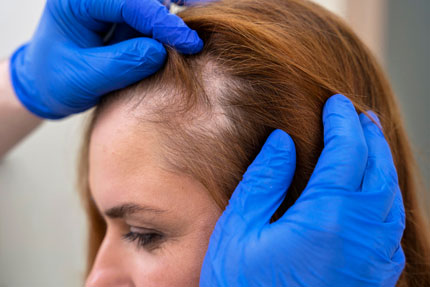
- Alopecia areata is a chronic, immune-mediated disease that most often affects the scalp, but it can also involve eyebrows, eyelashes, beard area, and body hair.
- Hair follicles are usually not permanently destroyed, which means regrowth is possible even after significant shedding.
- The condition can present as small round patches, widespread scalp loss, or complete loss of scalp or body hair in more severe forms.
- Nails may also be involved in some patients.
Epidemiology
- Alopecia areata is common enough that the estimated lifetime incidence is about 2% worldwide.
- It can begin at any age, although first onset is often seen in the third and fourth decades; children and adolescents can also be affected.
- Population-based studies have not shown a clear overall sex predominance.
- Earlier onset is linked with a higher lifetime risk of more extensive disease.
- Beyond hair loss itself, alopecia areata can carry a substantial emotional burden and is associated with anxiety, depression, and reduced quality of life in some patients.
Causal factors
Intrinsic factors
- Autoimmunity: Alopecia areata is primarily an autoimmune disorder in which immune cells target anagen hair follicles.
- Genetic susceptibility: Not everyone exposed to the same triggers develops alopecia areata, which suggests an inherited tendency in at least some patients.
- Immune dysregulation: Loss of the hair follicle's normal “immune privilege” is a key internal event that allows inflammatory attack on the follicle.
- Associated medical conditions: Alopecia areata is more common in people with other immune-mediated diseases such as vitiligo, autoimmune thyroid disease, atopic dermatitis, inflammatory bowel disease, and lupus.
- Psychiatric and systemic comorbidity: Higher rates of psychiatric disease and some nutritional issues, including iron deficiency anemia and vitamin D deficiency, have been reported in affected populations.
Extrinsic or trigger-related factors
- External factors do not usually “cause” alopecia areata by themselves, but they may trigger or unmask disease in a person who is already predisposed.
- Patients often report stress as a trigger, although the scientific relationship is complex and not identical in every case.
- Infections, systemic inflammation, and other immune challenges may contribute in selected patients, especially when disease activity changes suddenly.
- Diet-related triggers are not firmly established for most patients, and restrictive diets should not be started without a clear medical reason.
Schedule An Appointment Today
Our dedicated team is here to assist you. Reach out anytime—we’re ready to help!
Book Appointment
Pathophysiology
- In healthy skin, the growing hair bulb has a degree of immune protection known as immune privilege.
- In alopecia areata, this immune privilege breaks down, allowing cytotoxic immune cells to recognize and attack the hair follicle.
- Cytokine signaling, including pathways that involve Janus kinase (JAK) and signal transducer and activator of transcription (STAT), plays an important role in sustaining this inflammatory attack.
- Because the follicle is usually not scarred, treatment aims to calm inflammation and allow the hair cycle to restart.
How alopecia areata is diagnosed
- Diagnosis is usually clinical and is based on the pattern of hair loss, short broken hairs, exclamation-mark hairs, and scalp examination by a dermatologist.
- Dermoscopy and, in selected cases, laboratory evaluation for associated conditions such as thyroid disease or deficiencies may be useful.
- Screening is individualised rather than automatic for every patient, and it is guided by age, symptoms, personal history, and family history.
Treatment options
Treatment is chosen according to age, disease extent, speed of progression, site of involvement, previous response, and the emotional effect of hair loss.
Medical treatments
- Topical corticosteroids: Commonly used in mild or limited disease; they can reduce local inflammation and may help regrowth, especially in children or in patients who prefer noninvasive therapy.
- Intralesional corticosteroids: Intralesional triamcinolone is widely used for localized alopecia areata and is generally recommended for limited scalp involvement; even some patients with more extensive disease may respond.
- Topical immunotherapy: In more extensive but nonscarring disease, dermatologists may use topical sensitizers in selected patients, especially when simpler treatments are inadequate.
- Systemic corticosteroids: These may help rapidly active disease, but relapse after stopping treatment is common, so they are used selectively.
- Steroid-sparing systemic agents: Drugs such as methotrexate, cyclosporine, azathioprine and JAKi are used off-label in some moderate to severe cases when appropriate.
- Adjunctive therapy: Oral minoxidil may be used as an add-on in selected patients.
Procedural and clinic-based treatments
- Intralesional injections: A practical clinic procedure for patchy disease, especially when a fast local anti-inflammatory effect is desired.
- Topical immunotherapy in clinic practice: This is usually reserved for suitable patients with more extensive disease and requires supervised follow-up.
- Cosmetic support: Eyebrow camouflage, scalp fibers, wigs, and false eyelashes can be valuable parts of treatment because they improve quality of life while medical therapy is working.
Role of JAK inhibitors
- JAK inhibitors are targeted treatments that block inflammatory signalling involved in alopecia areata, especially the JAK-STAT pathway that helps drive immune attack on the follicle.
- JAK inhibitors perform better than placebo for meaningful hair regrowth and improvement in SALT scores.
- Current expert consensus supports systemic therapy for moderate to severe disease, and JAK inhibitors are now central options in that setting.
- Baricitinib is approved for adults with severe alopecia areata and ritlecitinib is approved for individuals aged 12 years and older with severe disease.
- Oral JAK inhibitors work better than topical formulations for alopecia areata.
- These medicines are not suitable for everyone; treatment decisions require medical screening, discussion of benefits and risks, and monitoring during therapy.
Role of diet
- Diet should be viewed as a supportive measure, not a replacement for medical treatment.
- Current literature does not support one universal “alopecia areata diet” that reliably reverses disease in all patients.
- A gluten-free diet may help only in patients who have alopecia areata together with celiac disease; it should not be recommended routinely for everyone.
- Adequate protein intake is important for healthy hair growth, and nutritional deficiencies should be corrected when documented.
- Mediterranean-style eating patterns and anti-inflammatory food choices may be reasonable for overall health, but evidence for direct disease control in alopecia areata remains limited.
Prognosis
- Prognosis is variable: some patients experience spontaneous regrowth, while others have recurrent or chronic relapsing disease.
- A younger age at onset is associated with a greater lifetime risk of extensive disease.
- Extent of hair loss, disease duration, nail involvement, and associated autoimmune disease may influence long-term outcomes.
- The good news is that alopecia areata is usually non-scarring, so regrowth remains possible and treatment can still help even after major shedding.
Latest advancements
- The biggest recent advance has been the rise of targeted JAK inhibitors, which have changed the treatment landscape for moderate to severe alopecia areata.
- Modern consensus statements now provide clearer algorithms for when to start systemic therapy and how to match treatment intensity to disease severity.
- Ongoing research is refining which patients respond best, how long treatment should continue, and how to maintain regrowth safely over time.
When to see a dermatologist
- New patchy hair loss, sudden shedding, eyebrow or eyelash loss, beard patches, or recurrent episodes should be evaluated early.
- Early assessment helps confirm the diagnosis, rule out mimics, screen for important associated conditions when appropriate, and start treatment before hair loss becomes more extensive.
A practical message for patients
- Alopecia areata is not “just a cosmetic issue”; it is a real immune-mediated medical condition with emotional and social impact.
- Many patients improve with treatment, and newer targeted therapies have expanded options for people with more severe disease.
The best treatment plan is individualized, realistic, and built around disease severity, patient age, goals, safety, and quality of life.